Showing posts with label Vermont. Show all posts

12/13/09

Wilmington

Averill's Stand near the present village of Wilmington serves as a reminder of the time when inns or ordinaries served as overnight stopping-places for the stages and six-horse freight teams that traversed the Molly Stark Trail over the mountains to Troy and the Erie Canal...Gone are these old places...Charles Edward Crane


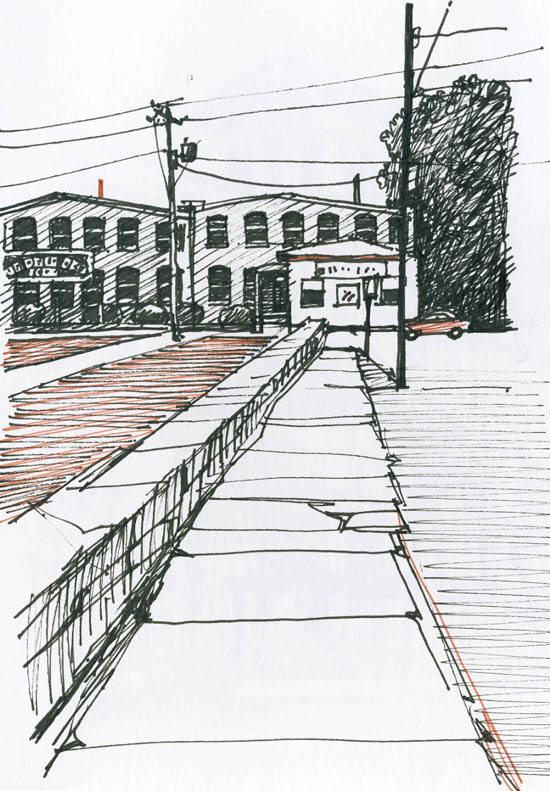
I rolled down Route 9 past Searsburg and Medburyville (or so the map told me), and was surprised at the bottom of the hill to find myself in a real town, and one that I had never heard of before--Wilmington. I pulled out my trusty iphone to see if the internet could explain where the heck I was, and found the very informative town website, full of facts, figures and photos, and plenty of helpful municipal information, including a quote from Plato on the value of a just citizenry.

And Wilmington is justly proud of its Memorial Hall, designed by the renowned New York firm of McKim, Mead (a native of Brattleboro) & White--yes, that would be Stanford White, the most famous American architect of the 19th century. Peek through the front door, because though the hall is plain and brown as a Puritan saltbox on the outside, the interior is an astounding miniature version of Boston's Symphony Hall, with acoustics to match. Right before the turn of the century, local Civil War hero and Wilmington’s richest citizen Major Childs had a hunch that the economic future of Vermont was in tourism, and he hired Stanford White to design this concert hall and the handsome adjoining Child's Tavern, now Crafts Inn. (There were, and are, a high volume of well-moneyed, well-meaning enterprising eccentrics tucked away in our unassuming Vermont hamlets.) In 1891 the railroad finally reached Wilmington, and fulfilled Child's prediction: his town became a tourists' mecca.

I'll have to come back for another hour's stroll up East and down West Main Street, and take a longer and better look at the wealth of architecture in the little town of Wilmington. Dot's Restaurant ("A National Treasure!" according to the late, lamented Gourmet magazine) beckons, and a number of little shops invite. Most of all, I'd be happy to stand on Main Street Bridge and look up the little river that meanders through the little town of Wilmington like slow, unstoppable time .

12/3/09

Woodford

This is the southernmost cross-state road in Vermont (Brattleboro to Bennington)...I once had a New York guest who had come that way over Hogback in the late afternoon, and the next morning before the rest of us were out of bed we discovered that he had got up and driven back twenty miles up Hogback to drink in that view once more...Charles Edward Crane


Woodford is the kind of Vermont town that you pass on the road before recognizing you've entered or left it--then turning around in someone's driveway (hoping he's not glaring suspiciously out his window) you head back the way you came, still searching for some sign of local identity.

Woodford is so lacking a center that it's sarcastically referred to by local scoffers as "Woodford City" ("Woodford City Stream" and "Woodford City Road" can be found in my Vermont atlas, so the insult seems to have stuck.) But like so many other nondescript, seemingly non-towns in Vermont, interesting discoveries reward closer examination.

I found out that Woodford is defined by its altitude, not its architecture. At 2,2oo feet, it's the highest town in the state (and 400 residents make it one of the smallest towns.) Woodford sits at this great height in the middle of Green Mountain Forest wilderness. Fortunately for local residents, 398 acres of these spruce, fir and birches, lakes, ponds and rills have been set aside for camping, hiking and fishing. This highest state park in Vermont also bears the proud name of "Woodford".

Route 9 between Bennington and Brattleboro is sometimes called the "Molly Stark Trail". Molly's husband, General John Stark, was instrumental in repelling the British near Bennington, thereby turning the tide of the Revolutionary War. (His famous battle cry was, "The Red Coats and the Tories...are ours, or this night Molly Stark sleeps a widow!", and fortunately for all of us, she didn't.) But Molly is also honored with place names all around southern Vermont in her own right as a selfless nurse and brave patriot.


This Molly Stark trail heading east from Bennington is one of the loveliest, and also loneliest, stretches of two-lane road in the state. Rolling down from the apex of "Woodford City", I admire the people who live so comfortably isolated here, every night falling asleep amidst mile upon mile of silent mystery.

11/28/09

Bennington

Vermont was born in a hotel. The Green Mountain Tavern in Bennington, known as Catamount Inn, had as a sign a stuffed catamount lion grinning toward New York. Here the Green Mountain Boys gathered. Here New York sympathizers were delivered for the high chair treatment--hoisting in a chair of ignominy from the porch roof. Here Ethan Allen planned the taking of Ticonderoga. Here the pioneers drank, not only with their eyes, but lustlily with rum to the new republic, as is evidenced by Allen's tap-room bill, still preserved...Charles Edward Crane


I'm happy to say I'm back on the Vermont road again, after a summer and fall of painting deadlines and travels far from my home state. Thank you, dear readers, for a long, patient wait! Let's take up where we left off, on Route 7 heading north into Bennington near the New York border.

Bennington is large enough to have sections with distinct personalities and histories ("Old", "North" and "Downtown"), and venerable enough to have played an important role in the drama of the founding of both the "Republic" of Vermont and the independent United States. A walk in Old Bennington takes you past buildings haunted by righteously angry ghosts--from the Old First Church (the original Protestant congregation in Vermont), to the site of the Catamount Tavern (in the 1770's the favorite watering hole of revolutionary conspirators against the powers of New York and England) and finally up to the heights of the Battle Monument obelisk.


The Battle of Bennington actually took place right across the border in New York, but it was fought by area farmers and woodsmen. British and Prussian troops (worn out by fanatical Monty Python-style precision drilling) were sure they would have no problem raiding Vermont for stores and ammunition on their march south to finish business with the rebellious colonies. Instead the royal army was defeated in a rout, and Bennington went down in history as one of the few battles where improvised troops beat trained contingents. As captured General Burgoyne wrote to his rulers in England, Vermont was a place "that abounds with the most active and rebellious race on the continent, and hangs, like a gathering storm, on my left." (Enter, 230 years later, Senator Bernie Sanders.)


You'll leave the ghosts of our political revolution and encounter remnants of the Industrial Revolution as you drive east into downtown Bennington. Textile and paper mills, iron furnaces and grist mills all provided jobs and fed the local economy until Vermont manufacturers could no longer compete with cheaper products.

This loss of industry was widespread--but one manufacturer from the 19th century that has survived and flourished to the present day is Bennington Pottery--an example of the importance of artistry as well as functionality in a product. Another survivor from the past is artsy Bennington College, founded in 1932 as an experiment in "self-dependence" for its mostly female student body. (All the Bennington graduates I know, including a guy, are smart and creative people, so the experiment must have worked.)

Driving out of town, I kept pulling the car over to the curb to get a closer, slower look at Bennington's old architecture. Some of these mills, stables, factories and homes look lovingly restored, some are reinvigorated and put to new uses, and some are decaying and seem forgotten in time. Each of these glimpses down an old sidewalk or back street evokes this town's long lost past, and seems to hold some meaning (even if I can't quite grasp it) for our future.

11/26/08

Vergennes

"...and the smallest city, Vergennes, boasts that it is the smallest city in the United States." Charles Edward Crane


What's the point of driving from town to town in my Toyota, juggling camera, map and sketchbook? I'm not an historian or economist gathering data, but I'm not just sightseeing either. I think this project is my way of trying to get a grasp on where I live (like realizing that there's much more to learn about a spouse ten years into a marriage--and I did move to Vermont because I fell in love with the place). My way of understanding is to look, draw, paint, gather images. Love, art and road trips are passionate processes with indefinite conclusions.

So, I slow down as I drive into Vergennes on Route 22A, and take in the small factory on the left (looks really old-- empty now or put to a new use?) and the first ornate downtown building on the right. I park, take my sketchbook and stroll down quiet Sunday Main Street.


The downtown of "the smallest city in the U.S." (only in Vermont would that be a bragging right) is in wonderful shape: ornate 19th century facades fastidiously painted in a spectrum of colors, and most buildings occupied with trades and services that make a town useful to locals. Even the laundromat is elegant.

And as often happens in Vermont, I sense ghosts here. This tiny city's heyday was in the 1800's, and today I'm looking at the beautifully maintained remnants of another century's energy, creativity and wealth.

Many towns have a "Mechanic Street", and it never disappoints. I find Vergenne's own version and follow it downhill a few blocks to Falls Park on Otter Creek. And as usual a bet made on rambling pays off, this time with a jaw-dropping view of three powerful waterfalls tumbling from the town past a jumble of old factories. Now I understand why Main Street is so fancy, the library so large, and homes so ornate in Vergennes!

Here's the phantom Vergennes that I feel still alive behind the empty factory facades: This first city in Vermont, established on Otter Creek in 1788, was a vital transportation hub serving stage coaches, river boats and then trains from up and down the East Coast. The falls provided energy for a self-sufficient economy: tanneries, grain mills, creameries and sawmills transformed and traded the bounty from miles of surrounding valley farms, and in return gave rural people the chance for stores-bought goods and cultural life.

I drive back up to Main Street and take a closer look at a pretty little Italianate building perched on a patch of grass at the top of the falls. According to the historical marker, it was built by the owner of the town's machine shop to house a pumping system he invented.


So here is a last ghost: the Vermonter who came off his father's farm with the skills and ambition to harness his city, state and the world itself to a new industrial dynamo. The Vermont town had always been enclosed in a strong circle of self-sufficiency, but it couldn't hold against that force. I'll have to keep driving and looking to try to figure out what vanished when that circle broke, and what remains.

Vergennes facts and figures

11/8/08

Bristol

An alternate, but nearly all-gravel route from Middlebury to Burlington is by way of the charming Bristol village, past the Lord's Prayer cut on a rock...Charles Edward Crane


I took a sharp right at Route 17 and headed up Stark Mountain, a winding, ear-popping climb past the Appalachian Trail to the summit's microwave tower at Buels Gore (getting out of the car there for a chilly look at the valley far below) and then a fast roll down the back side of Sugarbush into the town of Bristol.


Bristol feels to me like a humble, hidden Green Mountain Shangri-La tucked away at the end of a circuitous climbing path. The downtown rewards the adventurer willing to bypass the speed of the valley roads with an excellent breakfast (herb and spinach egg scramble) at Snap's Restaurant, and some interesting poking around in Main Street shops (though oddball Folkhearts with it's red facade is alas no longer there.)

Shopping in a small town is a pleasure rather than a chore: park your car, grab your market bag, and stroll from store to library to farmer's market, exchanging greetings with neighbors along the way. The news and opinions in a five minute conversation on a town street are like lines moving through a painting, connecting part to part and creating a strong whole.

And there's a place on Main Street in Bristol to sit in the sun and gossip, complain, analyze and laugh with friends on a warm autumn afternoon.


Bristol facts and figures

11/6/08

Moretown

Vermont is so streamlined and beponded that it has (if you count both banks of every stream) uncountable miles of shore line. The tourist in Vermont passes by and over brooks and rivers at every turn...Charles Edward Crane


My first road trip begins on a sunny October day with an amble south down Route 100B. It's easy to miss Moretown, the center of which on first viewing is just a stately town hall and a pronounced bend in the road.

But on closer inspection (afforded by a quick turn about and a second drive back around the bend) the village of Moretown reveals an intimate charm: two dignified churches, a clapboard library, the general store, and a very charming gazebo.


The main fact of Moretown is the narrow, boulder-strewn Mad River, seen as just a glimpse from the car as it crisscrosses the highway but central to the development and history of the town. During the 1800's the Mad River provided the productive energy for lumber and grist mills, power plants and creameries. Then one rainy November day in 1927 the river flooded and brought to Moretown and the rest of the valley sudden death and destruction.

But today the Mad River is placid, and I just want to stop the car and climb a big rock on the bank, and take a long look into quiet water.

Moretown Facts and figures

10/31/08

Marshfield

"The circus-barking title of the book, 'Let Me Show You Vermont', was born in a moment of bombast...The one encouragement to effort is the possibility that I may reflect Vermont, in some of its phases, differently and more fully than has been done before." Charles Edward Crane


Merv Spooner's barbershop is on the left side of Creamery Street just before the long roll down into Marshfield Village. If you stop in on a Saturday morning you can still get a haircut--"flat top specialist"--and some good conversation for five dollars. Ask Merv and he'll tell you about the mysterious theft of his barber pole a few years back (fortunately replaced with the help of funds raised by a local radio station's community phone-a-thon.)

I live on a nearby hill in Marshfield, and therefore can narrate more stories about this place than any of the other 250 towns in this state. I know, for instance, that most activity in Marshfield takes place not in the tiny town center, but in the old and new houses that dot the dirt roads of surrounding hills and valleys.

But I like the town centers, even if they are not much more than a steepled church and a cluster of aged homes. In Marshfield we also have a post office, Derek's Quick Stop and a hunting store, all merged together in a Vermont version of a 19th century clapboard mini-strip mall.


Marshfield spreads up to Hollister Hill (where I live) and down to the Winooski River from this nexus on Route 2, the historic east-west highway that runs from Washington State to Maine. I love a road with that kind of possibility.


Marshfield facts and figures

10/30/08

The Art of Action

I'm delighted to be a finalist in the "Art of Action: Shaping Vermont's Future through Art", a unique project that will commission ten visual artists to create bodies of work that address the present condition and future possibilities of Vermont. This ambitious idea is the joint vision of the Vermont Arts Council and native Vermonter Lyman Orton, an entrepreneur and philanthropist who takes an intense interest in his home state.


Last week I attended an orientation session where I had the pleasure of meeting the other nineteen finalists and hearing presentations by the project's organizers. I left the meeting inspired by their confidence in our ability as visual artists to make a real contribution towards defining the best possible future for our wonderful state.

I'll be working on my "Art of Action" proposal over the next two months, planning a series of paintings that incorporate both my ideas and those of fellow Vermonters. (The ten commissioned artists will be chosen after presentations of their proposals in January.)

The "Art of Action" project has given me a great reason to get started conducting my own individual visual survey of the "state of Vermont" from Lake Champlain to the Connecticut River and from Massachusetts to the Canadian border. I've been wanting to explore every byway and corner of this place since I moved up here over a decade ago, and now's the time to grab atlas and coffee thermus and head out the door. (I may even try for membership in the "251 Club", an elite group of road warriers who have visited every town in the state.)

My sketchbook and I will be driving many miles of back roads over the coming months, and I hope you'll join us by subscribing to this blog! Just click on "posts" below and choose "bloglines", and you'll be along for each new jaunt on my Vermont journey.